
100 years of inventing & reinventing tennis courts
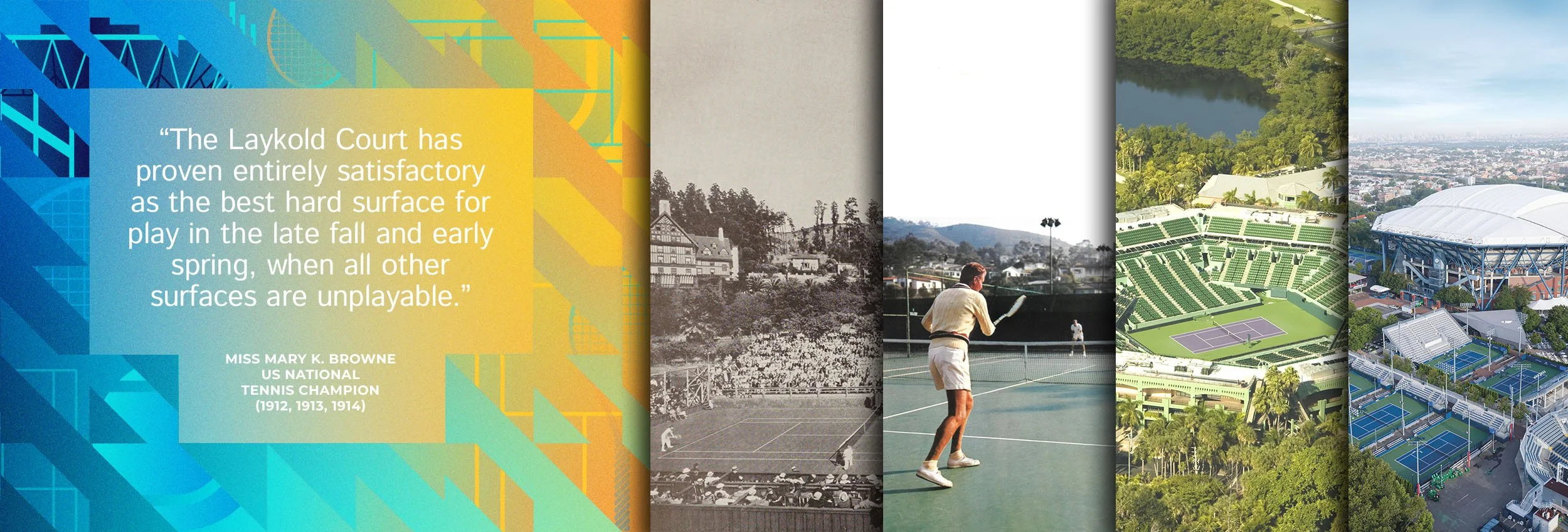
Since 1926 Laykold has had a transformative impact on the game.
From the invention of hardcourt tennis in the 1920s to today’s era of Grand Slam-level pace, precision, force reduction and green technology, tennis has undergone a remarkable evolution. Few elements have influenced how, where and by whom the game is played more profoundly than the surface beneath players’ feet.
The earliest known reference to Laykold as a tennis court surface is 1926, which means that for 100 years, Laykold, alongside iconic brands such as Dunlop, Wilson and adidas, has played a transformative role in the development, global spread and success of tennis.
1920s: The birth of hardcourt tennis allows more people to play
The first hardcourts borrowed technology from road surfacing. Infrastructure manufacturers developed cold-pour asphalt, literally “laid cold”, marking the beginning of Laykold.
By removing the cost, maintenance burden and seasonality of grass and clay, Laykold lowered the barrier to entry, which ultimately democratized the sport.
1940s: The global boom of tennis
Following World War 2, tennis boomed as tennis shifted from exclusive country clubs to public parks, driven in the US by an expanding middle class and the construction of thousands of new tennis courts by local governments. Hardcourts also allowed the game to expand in Europe, Asia, Africa and Australia.
Millions of players took their first steps onto a Laykold court. Without hardcourts, tennis would likely have remained niche and locked away in private clubs.
Hardcourts reshaped how tennis is played
Predictable bounce and speed gave players confidence in the surface, accelerating new techniques such as the Western grip and the rise of the true all-court player. That trust encouraged greater speed and technical variety, including single-handed backhands, slice and topspin, making the game faster, more dynamic and more exciting
Crucially, hardcourts reduced the skills gap between players with access to elite facilities and those without. Athletes everywhere could train on surfaces that mirrored the professional game, regardless of where they started.
Laykold in the 1960s
1950s: Greater control and greater precision
In the 1950s, the introduction of an acrylic resurfacer layer transformed asphalt courts, improving smoothness, durability and playability.
The later addition of sand allowed precise control of ball speed and friction. Through proprietary sand blends and detailed gradation analysis, Laykold can now deliver court speed to within half a point, creating unmatched consistency and confidence for players at every level.
In 1961, Laykold was installed on the South Lawn of the White House during the administration of First Lady Jacqueline Kennedy. This court remains Laykold to this day.
1970s: Tennis was on TV, in color and big
Tennis boomed again in the 1970s with the arrival of color television and charismatic stars like Evert. Navratilova, Bjorg, McEnroe and Connors. Laykold played its part by enhancing the experience with new color technology that made the game more vibrant and exciting for the exploding fan base.
“In the past ten years I have visited nearly every country where tennis is played and have tried nearly every type of court surface. I feel qualified to say that Laykold courts are at least the equal of any I have seen.”
Advancing player welfare
From the 1970s, Laykold began addressing player welfare with new technology that kept courts up to 30°F cooler than traditional asphalt.
That commitment continued in 2016 with the launch of Laykold Gel, delivering +15% force reduction and 70% energy return. Laykold Gel means tennis can be played with ‘happy knees’.
In 2023, Laykold introduced Chill Court Technology, using patented Phase Change nanotechnology to absorb and dissolve heat. Tested in extreme Australian conditions, it delivers up to a 30% reduction in surface temperature.
Indian Wells
Recycled balls and recycled paint
The requirements of players, clubs and communities are constantly changing, and as we begin our second century green technology is top of the list.
As the only courts to incorporate recycled tennis balls, Laykold USA provides some of the world’s most environmentally responsible surfaces, unlocking new funding opportunities for clubs, schools and public facilities. From October 2025, every Australian-made Laykold court also includes recycled paint, saving the equivalent of 124 one-litre paint cans per court from landfill and waterways.
From 1920s legends to modern tennis landmarks
Over the last 100 years, generations of legendary players have competed and trained on Laykold, including the great Mary Brown, three-time US Champion (1912–1914), who coached on Laykold courts at Lake Erie College.
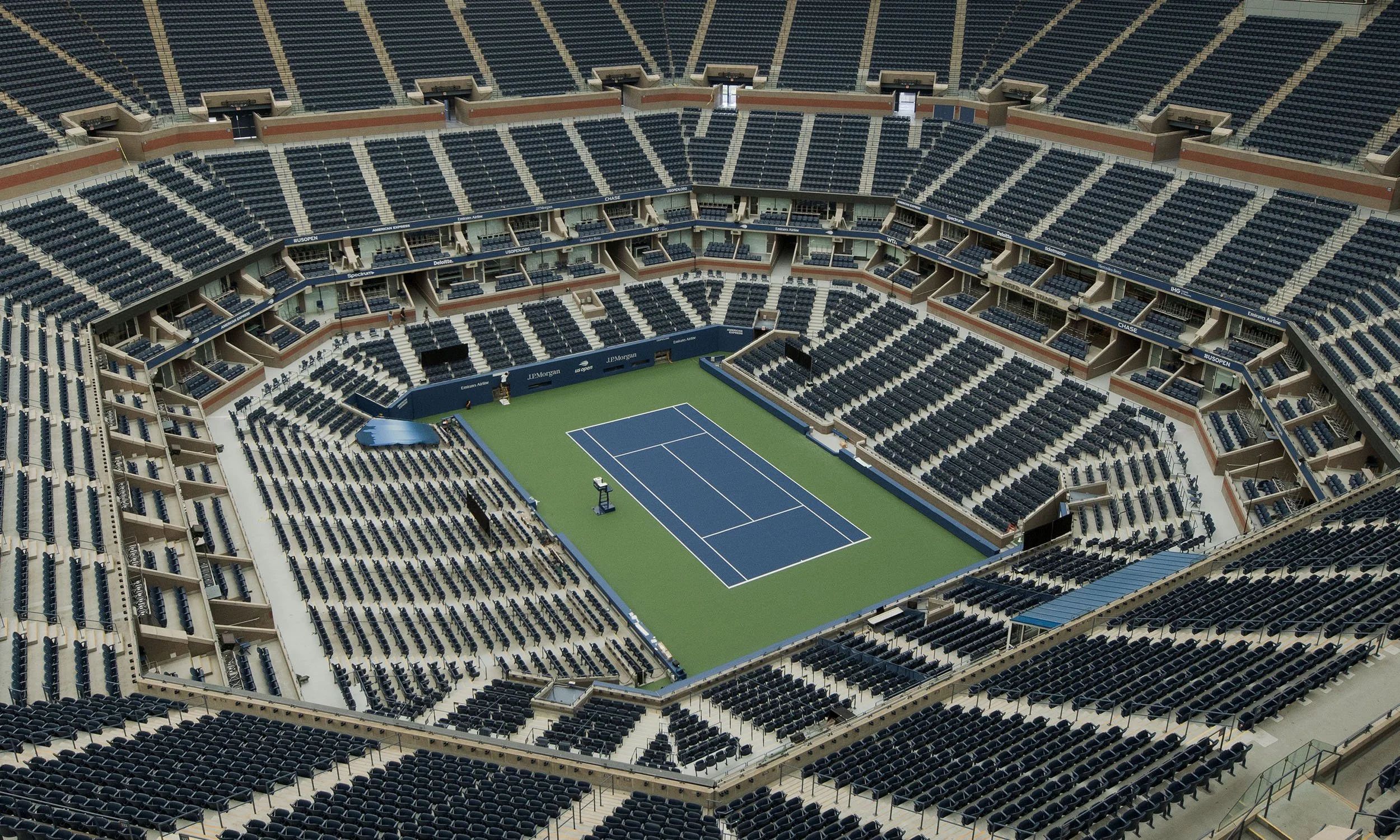
In 1935, Don Budge and Bobby Riggs contested the final of the Pacific Coast Tennis Championships on Laykold at Berkeley Park. 50 years later in 1985 at the first ever Lipton International Players Championships the women’s final featured Martina Navratilova and Chris Evert. Jump another 40 years to the US Open on Laykold and the winners were Aryna Sabalenka and Carlos Alcaraz.

US Open
Wuhan Open
Today, more professional tournaments are played on Laykold than on any other surface, reflecting the trust placed in its performance and consistency at the highest level of the game. Laykold courts are used across the ATP and WTA Tours, including:
US Open
Miami Open
BNP Paribas Open in Indian Wells
Wuhan Open, China
Abu Dhabi Open
Mexican Open in Acapulco
BNP Nordic Open, Stockholm,
Winston-Salem Open, USA
100 years loving the game
Now made in Australia, Germany and USA in ISO certified factories and installed by the world’s largest installation network, Laykold courts have come a long way.
Innovating alongside the game, our love for tennis stretches generations. Thank you to everyone who has stepped on a court and helped make tennis one of the world’s great sports.
US Open