
Interview: Brad Tuckman, Co-Founder, The Fort
The pandemic-inspired passion project that is powering pickleball in Florida.
Brad Tuckman came to pickleball from an unexpected path. After a successful career building global content studios and working with some of the world’s biggest brands, he sold his business and stepped back from work.
It was then, with time on his hands (and thanks to his father’s long-time enthusiasm for pickleball) that he discovered the sport. What began as a way to stay active during the pandemic quickly grew into a new passion and, ultimately, a new business.
Today, Brad is the co-founder of The Fort, a state-of-the-art pickleball facility in Fort Lauderdale, Florida, and one of the most ambitious projects of its kind. We caught up with him to find out more…
How did The Fort come to be?
During COVID, pickleball became a lifeline for me. I saw people waiting hours to get on public courts and thought, ‘this is my next business.’ I partnered with Rich Campillo, who was already working with the city on pickleball initiatives, and together we proposed a public-private partnership. The city provided land and we built the facility. It took a couple of years, but that’s how The Fort was born.
What makes The Fort stand out from other venues?
We’re among the top facilities in the country in terms of court count, with 43 courts, but what truly differentiates us is our stadium – the first purpose-built pickleball stadium in the world.
Beyond that, we designed The Fort to be social-first and competitive second. We have elevated walkways so you can see the action, a central bar, a full restaurant, a pro shop, and even an eight-acre lake with water sports. There’s a physical therapy center opening soon, plus spaces for events and social games. We wanted it to be a place for both locals and tourists, whether they’re here to play or simply enjoy the atmosphere.
The Fort
How do you balance pickleball’s social and competitive sides?
That balance is key. Only a very small percentage of players compete in tournaments – most play for fun and community. At the same time, people want good games at their skill level. With so many courts, we had to create rules and systems to help match players appropriately. Our goal is to provide an environment where everyone feels welcome, whether they’re just starting or playing at a high level.
How big a demand are you experiencing?
It’s huge. We open at 6 a.m. and sometimes don’t close until midnight. There are days when all 43 courts are booked solid. We currently have about 1,100 members, with more snowbirds arriving soon, and we host between 150 to 200 non-members daily. With cruise passengers passing through Fort Lauderdale – many of them avid pickleball players – it can feel like air traffic control managing everyone’s play.
AARP Open at The Fort
AARP Open at The Fort
Why did you choose Laykold as your court surface partner?
I’d known Laykold for years, having first dealt with them when I installed a home court. They’ve been the trusted surface for the US Open, so for us, it was about choosing a brand with a proven record in professional tennis and the commitment to bring that same standard to pickleball. Pickleball courts see even heavier use than tennis, and durability matters. Laykold not only provided the materials but also oversaw installation with our contractor, ensuring everything met their standards. They’ve been great partners – responsive, invested, and keen to innovate with us on things like testing cushion surfaces.
“Laykold not only provided the materials but also oversaw installation with our contractor, ensuring everything met their standards. They’ve been great partners – responsive, invested, and keen to innovate with us on things like testing cushion surfaces.”
You mentioned innovation – can you talk about what’s next for the courts at The Fort?
We’re planning to add a couple of Laykold cushion courts which have been designed to be kinder to joints and better for player welfare. We won’t tell players which ones they are at first. We want to see if people notice how they play – whether they feel more forgiving on the legs.
For the older demographic, joint-friendly surfaces can make a big difference. But at the same time, we have to be mindful of court speed. Competitive players don’t want surfaces that slow the game down too much. That’s why we trust Laykold – they’ve worked for decades with tennis pros on pace and playability, and now they’re applying that same knowledge to pickleball.
What kind of response have you had to the courts?
The feedback has been excellent. People love the look and feel of the courts. We used a mix of US Open blue and green, and Miami blue, plus a special pink court for breast cancer awareness, which has become one of our most popular. Laykold’s quality shows – the courts are holding up well under massive use, and when issues arise, they’re quick to help us resolve them.
Looking ahead, where do you see pickleball going?
I think growth in the U.S. will keep pushing facility demand, especially since public parks are overcrowded. At the same time, it’s exploding internationally, particularly in Asia. At The Fort, we’re focused on welcoming new players – every day we run free beginner clinics, and 10 to 20 people show up to learn. We’ve found that growing the sport at all levels creates a healthier community, and that’s good for everyone involved.
Finally, how would you sum up what you’re building at The Fort?
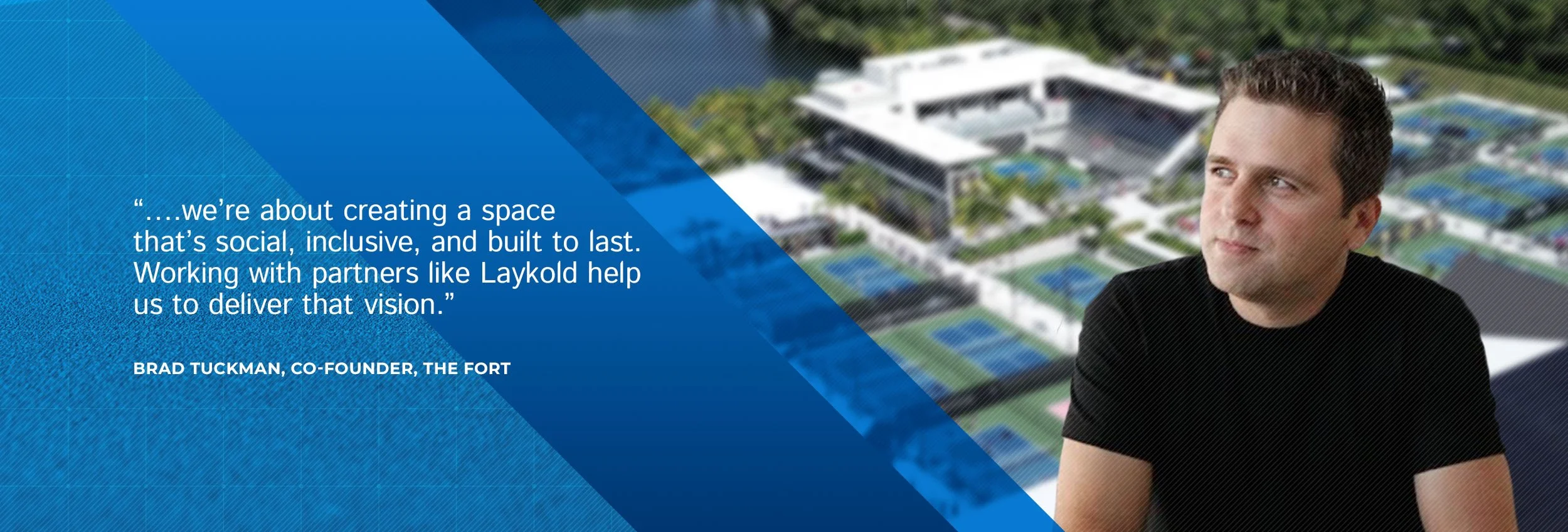
We want to be more than just courts. Some people call us “the Augusta of pickleball” or “the US Open of pickleball,” and whilst that’s flattering at the core, we’re about creating a space that’s social, inclusive, and built to last. Working with partners like Laykold helps us deliver that vision.